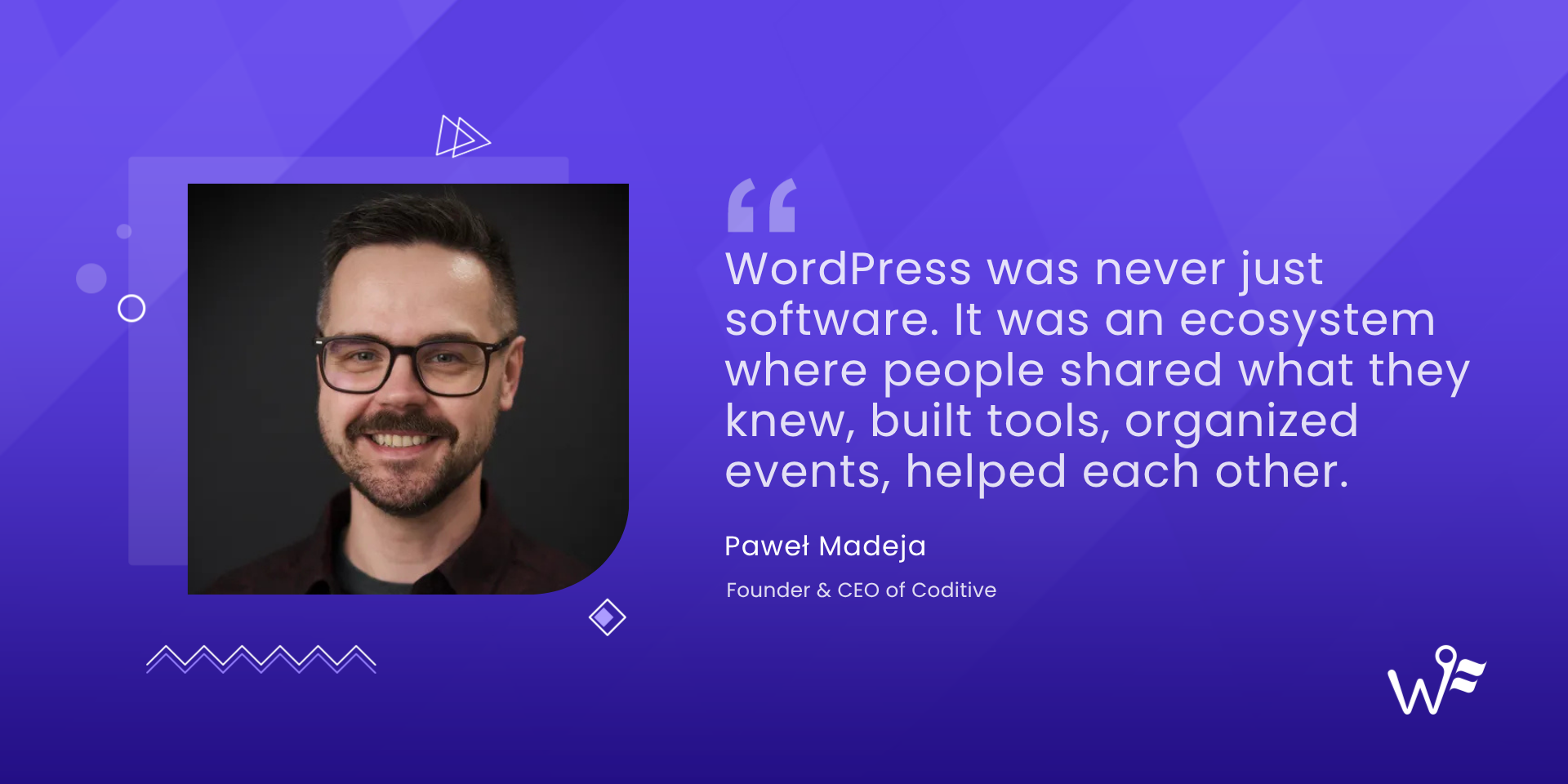
My name is Paweł Madeja. I am the CEO of Coditive, a web development company based in Knurów, Silesia, in southern Poland.
Knurów is not the first place people picture when they think about an international technology company. It is a smaller city near the A1 and A4 highway interchange, close to bigger places that get mentioned more often.
That is part of the story, though. We did not start in a tech hub. There were no investors, no impressive office, no perfect business plan.
For me, it started while I was studying at the University of Lower Silesia. That is where I spent more time around digital media and interactive projects. One of my first bigger projects was a platform called “Make a Choice.” The university asked my colleagues and me to build something interesting and fun that would present different degree programs to prospective students. The result was a digital platform that mixed elements of a game, a film, and public information.
Looking back, it makes sense. I was already interested in the same questions I still care about: how people use the web, how interaction changes communication, and how technology can make information easier to understand and more interesting to explore.
Today I run Coditive with a small team of people who genuinely care about the work. We work with clients around the world, but our roots are still here in Poland.

How it started
I first found WordPress in 2007 while building a website for a school library.
It was not a glamorous project. There was no big client, no agency process, no polished strategy. The library needed a website, and WordPress looked like a practical way to build it.
That first experience stayed with me because WordPress solved a very human problem. It made the web editable. The person managing the website did not need to call a developer for every small change. They could publish, update, and manage content on their own.
That mattered to me from the beginning. A website should not become a cage. It should give people control.
So I began with WordPress. First themes, then plugins, then more complex custom projects. What started as typical freelance work slowly turned into a company. As our clients grew, their needs grew too. A simple website was no longer enough. They needed better performance, custom workflows, e-commerce, integrations, and websites that supported real business operations.
WordPress grew during that time, and we grew with it.
What I liked from the beginning was the community. WordPress was never just software. It was an ecosystem where people shared what they knew, built tools, organized events, helped each other, and argued about technical decisions with surprising passion.
That last part is a compliment. It means people care.
Why Coditive exists
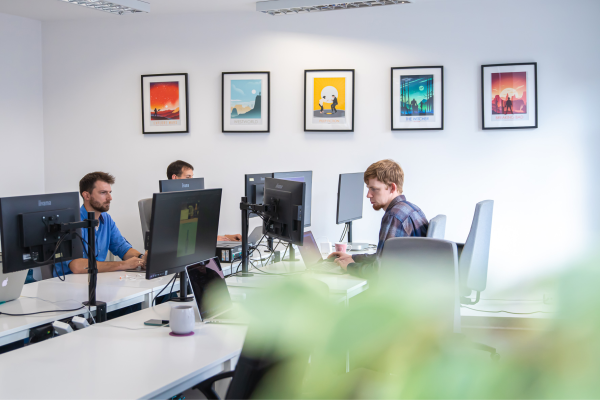
Coditive turned that work and experience into something stronger: a focused team, a clear process, and a company clients could trust with bigger, more ambitious projects.
Over the years, we have delivered more than 850 projects. We have worked with companies from Poland, Denmark, Germany, Switzerland, Canada, the United States, Belgium, Costa Rica, the United Kingdom, Austria, and other markets.
WordPress is still part of our foundation. We build custom WordPress websites, WooCommerce stores, plugins, migrations, and long-term maintenance projects. We work with agencies that need white-label support, and we help companies whose WordPress sites are slow, messy, hacked, or simply difficult to change.
At some point, though, WordPress alone was not enough for every project. Clients needed more interactivity, faster interfaces, and more flexible frontend work. That is when we moved deeper into the Vue.js ecosystem and started integrating Vue with WordPress more often.
In 2017, I spoke at VueConf about integrating Vue.js with WordPress. At the time, not many teams were doing that. For us, it confirmed that we were moving in the right direction: keeping the strengths of WordPress, but connecting it with modern frontend development.
Nuxt, a framework built on Vue.js, was the next step. It helped us build applications that were faster, better structured, and more SEO-friendly. Over time, Vue and Nuxt became a core part of Coditive, and we became an Official Nuxt Partner. I am pretty proud of that.
Today, WordPress, WooCommerce, Vue.js, and Nuxt are still the core of our work. When a project needs something different, we also work with CMS platforms like Strapi or Directus, and with technologies such as Laravel and Node.js.
In 2025, we started another chapter with AI-related services through coditive.ai.
The idea was simple: the internet is changing because of AI. People are no longer searching only in Google. They ask ChatGPT, Claude, Perplexity, and other AI tools. Many websites are not ready for that, so we started helping companies make their websites easier for AI systems to understand through technical GEO audits, AI-friendly structure, and practical automations.
It still feels early, but I think this is one of the most interesting changes in the web since mobile.
What has been difficult
I do not have one dramatic “worst moment” that defines the company.
Running a software company is not always easy. There are difficult projects, stressful deadlines, hard decisions, and moments when you have to admit something could have been done better.
But I do not think about Coditive as a story of one big crisis.
For me, the harder part was more ordinary: staying consistent. Building a team that does not change every few months. Keeping clients for years. Letting the company grow without losing the things that made it good in the first place. That is also what I am most proud of.
A large part of our team has been with us for a long time. Many clients have stayed with us for years too. Some client relationships recently passed 10 years. In our industry, where people switch jobs, agencies change direction, and projects often move from one team to another, that stability matters and it means we are doing something right.
One of the biggest lessons for me was that good code is not enough. You can have talented developers and still fail if communication is weak. You can build something technically correct and still disappoint a client if expectations were unclear. You can finish a project and still feel bad about it if the process was chaotic.
That changed how we run Coditive.
Today we pay a lot of attention to communication. We have an internal guide for how we communicate, and inside Coditive we treat it almost like a sacred thing. We also give clients direct access to the developers working on their code. A project manager keeps things organized, but we do not hide developers behind layers of process.
One of our core rules is to be honest as early as possible. If something will take longer than estimated, we say it. If a decision may create problems later, we say it. If something goes wrong, we do not wait until the last possible moment to explain it. That is how you build trust.
For me, that is worth more than any polished agency slogan.
My team
Coditive was never only my journey. It has always been shaped by the people who helped turn it into what it is today.
Our leadership team includes Olga, our COO, who keeps operations and finances under control, and Przemek, our CTO, who leads the technical side and is very active in the WordPress community.
The rest of the team includes frontend developers, backend developers, a UX designer, and project managers. We are remote-first, but we are still close as a team.
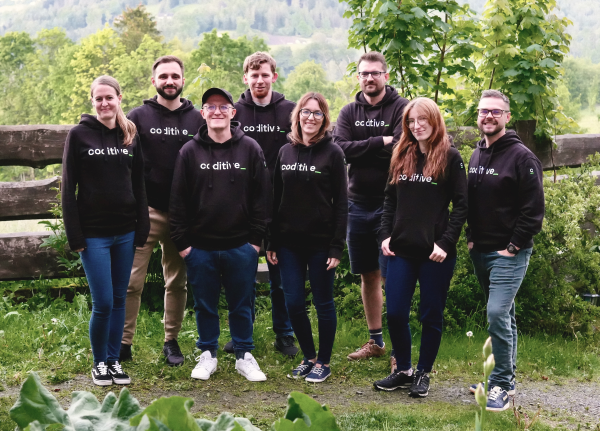
We organize internal Dev Days, where we stop client work for a day and learn from each other. We also just like spending time together, whether that means a trip to the mountains, a barbecue, or watching a match after work.
We are serious about the work, but we do not take ourselves too seriously.
That balance matters. Software projects can be stressful. Deadlines, bugs, budgets, integrations, migrations. There is always something. Having a team that can stay calm, help each other, and still laugh together is a big part of why Coditive works.
Advice for business owners
My advice for people who want to start their own business is simple: do not build the company you think looks impressive from the outside. Build the company you actually want to run every day.
It is easy to chase size. More people, more revenue, more offices, more everything. Bigger is not always better. At Coditive, we are not trying to become a 200-person agency. We want to stay small enough that everyone knows each other, but experienced enough to take on serious projects.
That is the company I want to run.
The second piece of advice is to pick a niche, but do not become blind to everything else.
WordPress gave us clients, experience, community, and a strong technical base. But we did not stop there. We moved into Vue.js, Nuxt, headless architecture, and now AI-related services. The niche helped us start. Curiosity helped us grow.
If you are starting today, I would not choose a niche only because it is trendy. I would choose something where you can build real expertise and stay interested long enough to survive the boring parts.
Because there will be boring parts.
Invoices, contracts, hiring, difficult conversations, estimates, maintenance, documentation. Business is not only the exciting launch moments. Most of it is consistency.
WordPress and what comes next
I still believe WordPress has a strong future.
Every few years, someone says WordPress is dead. Then millions of businesses continue using it because it solves a real problem: publishing and managing content without needing a developer for every small change.
That will not disappear.
But WordPress does need to keep evolving. The web is different now. Performance matters more. Accessibility matters more. Security matters more. Editorial experience matters more. AI visibility will matter more too.
Websites will not only be read by humans and search engines. They will be read, summarized, and interpreted by AI systems.
That is a big shift.
I do not see modern frameworks like Nuxt as a threat to WordPress. The same goes for other CMS platforms and publishing tools. I see them as different tools for different jobs. Sometimes WordPress is exactly right. Sometimes a headless setup makes sense. Sometimes Nuxt without WordPress is the better path.
A good technical partner should not sell one tool every time. They should choose what fits the project.
For Coditive, the plan is to keep growing in three areas: WordPress and WooCommerce, Vue.js and Nuxt, and practical AI.
Not because these are fashionable names, but because they match what our clients need.
The WordPress community
The WordPress community has mattered to our company from the beginning.
We sponsor and attend WordCamp conferences. Our CTO, Przemek Hernik, speaks at WordCamp and WordUp events and writes on pragmate.dev about modern WordPress development: cleaner architecture, performance, coding standards, and component-driven work. His talks are available on WordPress.tv.
For us, events are not only about promotion. They are a way to meet people, learn how others solve problems, and remember that behind all the code there are actual humans trying to build useful things.
That is easy to forget when you spend most of your day in tickets, repositories, and pull requests.
For me, WordPress has always been about the ecosystem: the documentation, plugins, meetups, conferences, Stack Overflow and Reddit threads, blog posts, and all the people who shared their knowledge along the way.
That collective part of WordPress is what made it special.
How I stay up to date
I try to keep up with what is happening in WordPress, Vue, Nuxt, AI search, and automation.
Inside Coditive, we also learn from each other. Our internal Dev Days are useful because they make us step away from client work and look at the bigger picture.
What changed? What should we try? What should we stop doing? What did we learn the hard way?
I also value conversations with other founders and developers. Sometimes the best insight does not come from a long report or a conference talk. It comes from one honest conversation with someone who has already made the mistake you are about to make.
And because the web changes all the time, I try not to get too attached to one way of doing things. WordPress was a great starting point for us. Vue and Nuxt opened another chapter. AI is opening the next one.
The important thing is not to chase every new trend. It is to keep learning, keep testing, and stay honest about what actually helps clients.
Life outside work
Outside work, I am a dog lover.
That probably says something about me. I like loyal, honest creatures, and I respect routines that force you to leave the screen and go outside.
Running a company can easily take over your whole day if you let it. There is always one more email, one more idea, one more thing to fix. So having dogs around is a good reminder that not everything important happens in Slack, email, or a browser tab.
Sometimes the best reset is simple: close the laptop, go for a walk, and let the dog decide the route.
Connect with me
You can find me here:
Website: https://coditive.com
LinkedIn: https://www.linkedin.com/in/pawelmadeja/
Email: [email protected]
If you are building something with WordPress, WooCommerce, Nuxt, Vue, or you are trying to understand how your website should adapt to AI search, I am happy to talk.
And if there is one thing I would like people to take from my story, it is this:
You do not need to start with a huge team or a perfect plan. You can start small, do honest work, keep learning, and slowly build something durable.